Your Travel eSIM Can Get You Online. It May Not Let You Call the Hotel.
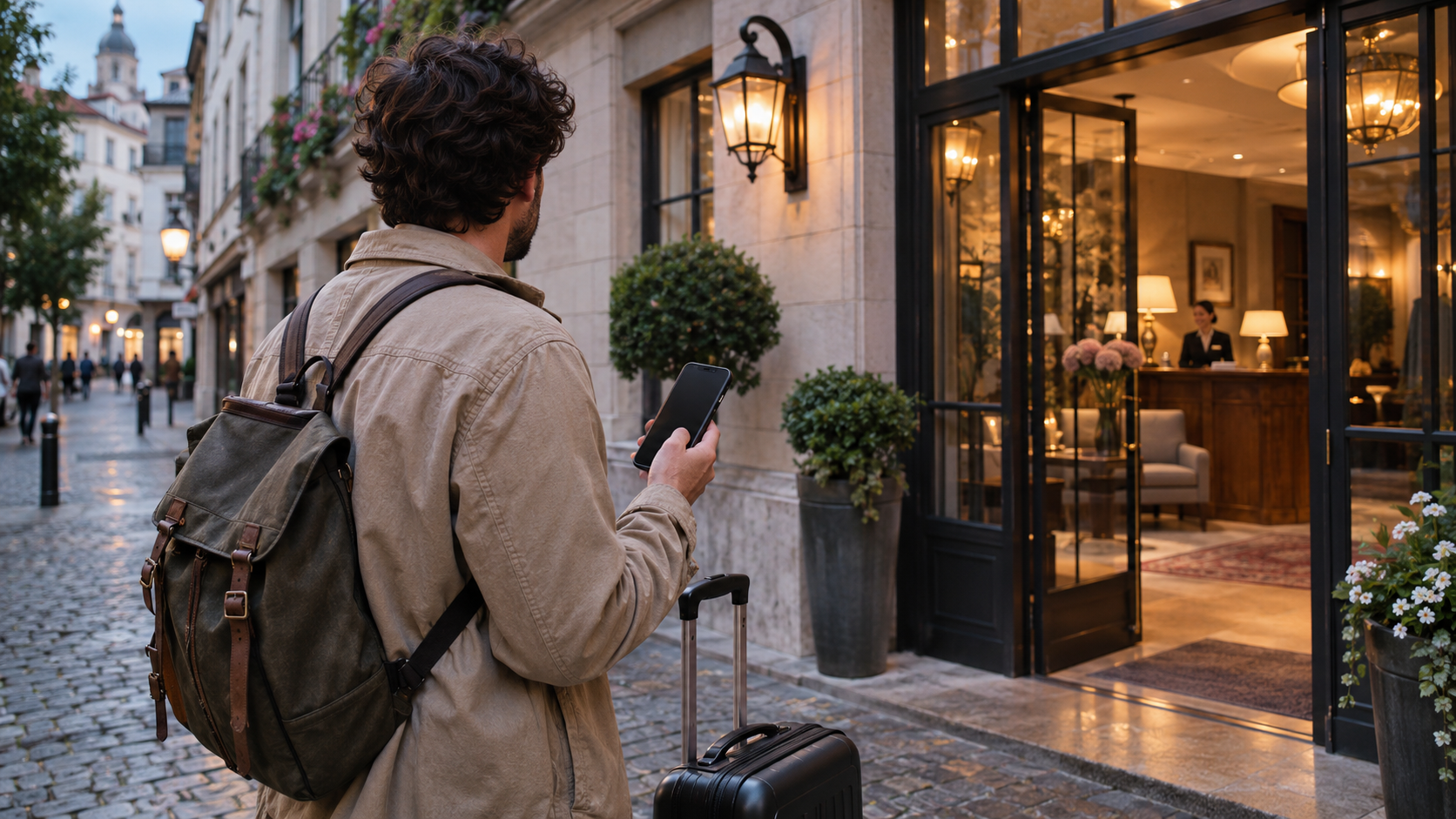
You land, switch on your travel eSIM, and watch the messages arrive.
The map works. Your booking confirmation opens. You send a photo from the airport.
Then you notice the message from your hotel: “Please call us when you arrive.”
You tap the number.
The call does not go through.
You have mobile data. You have a working phone. Yet the ordinary task of calling a reception desk has become unexpectedly complicated.
The missing piece is easy to overlook: internet access and telephone service are different things.
The word “connected” hides several separate services
At home, your mobile plan probably bundles together capabilities you rarely think about individually.
You can use the internet, call phone numbers, receive calls, and exchange text messages. They all happen on the same device, so they feel like one service.
Travel plans can separate them.
A data-only eSIM provides internet access. It may let you use maps, browse websites, and call people inside messaging apps. It does not necessarily include a conventional phone number or calls to the telephone network.
That is not a defect. It is what the plan provides.
The trouble begins when we assume that because the familiar apps work, every familiar phone function will work too.
The hotel is not in your group chat
Internet calling between two people using the same app can be straightforward.
Calling a business is a different situation.
A small hotel might publish only a landline number. A restaurant may take reservations by phone. A tour organiser might ask you to call if you cannot find the meeting point.
You cannot always persuade the person at the other end to download your preferred messaging app.
And you should not have to. They already gave you a way to contact them.
What you need is a service that can connect an internet call to an ordinary mobile or landline number. Not every app with a call button does that.
Three connections worth distinguishing
Before travelling, it helps to separate three questions.
Can I get online?
This is the job of your Wi-Fi connection, roaming data, or travel eSIM.
Can I call the numbers I need?
That depends on your mobile plan or a separate calling service. Check the actual destination and number type rather than assuming all calls are covered.
Can people reach me back?
An outgoing calling service does not necessarily give you your own incoming number. If a hotel, customer, or colleague needs to return a call, establish which number they should use.
One product may cover several of these needs. Sometimes you need a combination.
The important part is knowing which arrangement you have before you are outside a locked reception door.
Keeping your home SIM active is another decision
Some travellers keep their home SIM enabled alongside a travel eSIM.
That can be useful, but it requires attention to the home carrier’s roaming conditions. Data, outgoing calls, incoming calls, and messages can be treated differently.
Choosing the travel eSIM for mobile data does not, by itself, tell you what a call made through your home line will cost.
Read the carrier’s current terms for your destination. Device settings also differ, so check which line your phone uses for calls and data.
A few minutes spent understanding those settings at home is preferable to guessing at the airport.
Test an ordinary call before you need an important one
A messaging-app call to a friend does not test whether you can call a landline.
If you plan to use an internet calling service while abroad, make a short, non-urgent call to an ordinary number before leaving. Check that you understand the destination rate, can grant microphone access, and can hear the other person clearly.
If callbacks matter, test that separately.
Save important numbers with their international country codes. Keep booking references and addresses available offline.
None of this is particularly exciting travel preparation. Neither is checking a suitcase zip. Both become more interesting when something goes wrong.
Where TwinPhone can fit
We work with HELPERG, the company behind TwinPhone.
TwinPhone offers international calls to ordinary mobile and landline numbers through a browser, with iPhone and Android apps available too. It uses an internet connection, which may come from Wi-Fi or a suitable mobile data plan.
Calls use prepaid credit. Virtual US and Canadian numbers are available separately for receiving calls and SMS.
That makes it one possible addition to a data-only travel setup, depending on where you need to call and whether the destination is supported.
It is not an emergency calling service. It cannot send SMS, and virtual numbers may be refused by services that require verification. Keep an appropriate alternative for emergencies and check any essential account-access requirements before travelling.
Pack a communication plan, not just a data plan
You do not need a folder full of calling apps.
You need answers to a few ordinary questions:
How will I get online?
How will I call a business that only provides a phone number?
Which number can people use to call me back?
How will I access essential accounts?
What will I use in an emergency?
Once those answers are clear, a data-only eSIM can do exactly what you bought it for.
The surprise disappears.
You arrive, open your booking, and call the hotel.